

February 2026
In this dispatch: a book about a city, a conference for rural bankers, and what illness taught me

In Pedagogy of the Oppressed (1970), Paulo Freire pointed out that the usual model of education follows a “banking” style: students are receptacles of knowledge, and those who have more knowledge are believed to be “better” people. As an alternative, he suggested learning through dialogue, reflection, and the co-creation of knowledge.
Being a lecturer and social science researcher, I’ve been trained through this model, prioritizing the separation and taxonomizing of reality. But reality is more so interaction, relationship, movement, and interdependence—of seemingly separate things. My hand has fingers, but it is not all finger, and when I open my hand my fist disappears. Do you see?
As such I must resist becoming a mere “walking encyclopedia,” containing large but limited information. The work we do should be interactive; it should engage with reality and enrich our relationships—with each other, and with the world.
Doing the Work
I revised my membership structure on Patreon, allowing for a lower, more accessible tier that can access all my research notes and links! Learn more about it here.
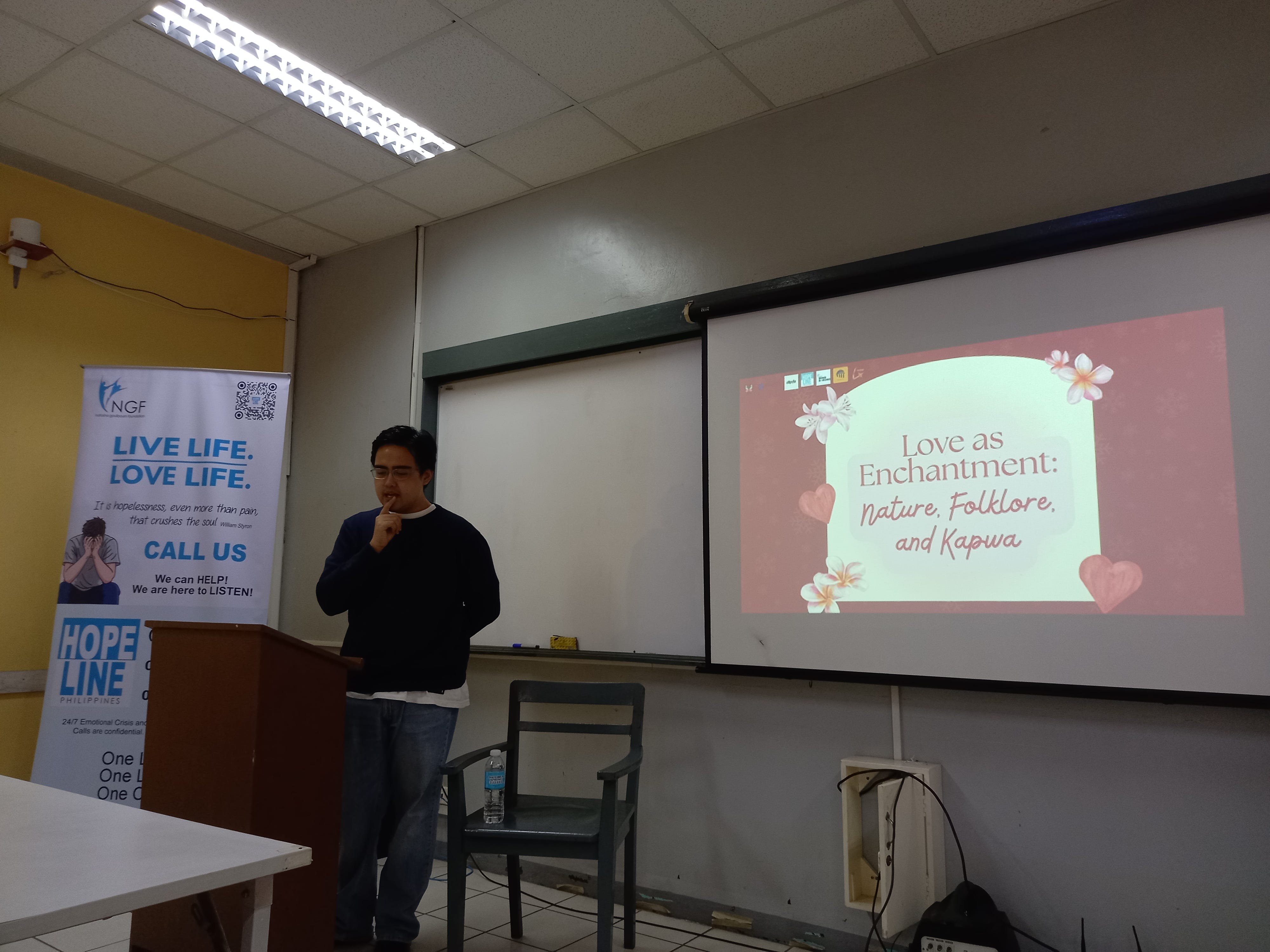
A week before Valentine’s Day, I gave a talk for UP Psychedelics, a psychology student organization in UP Diliman. I talked about love, obsession, and folklore. I will make the recording available for my Patreon subscribers soon.
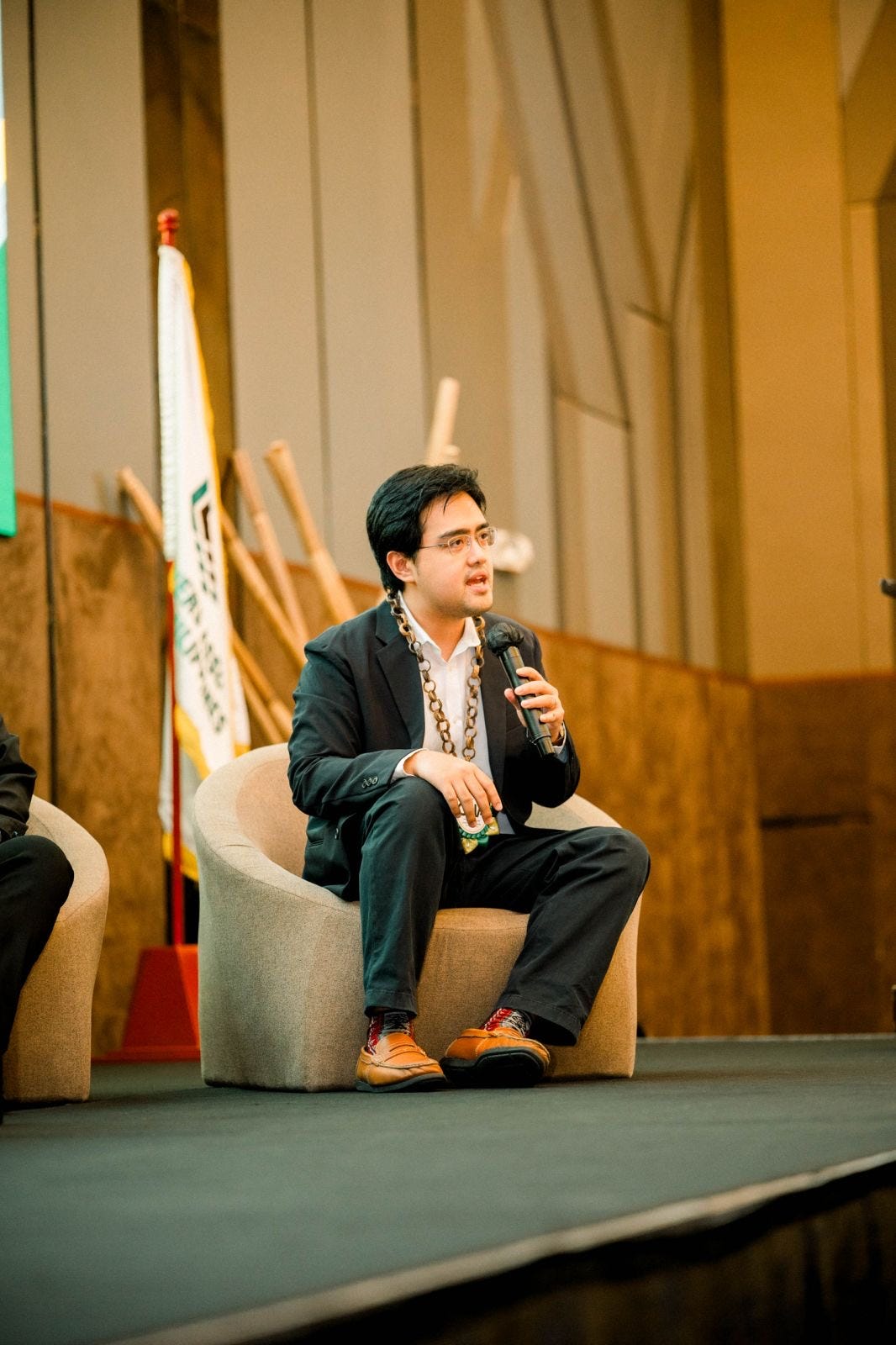
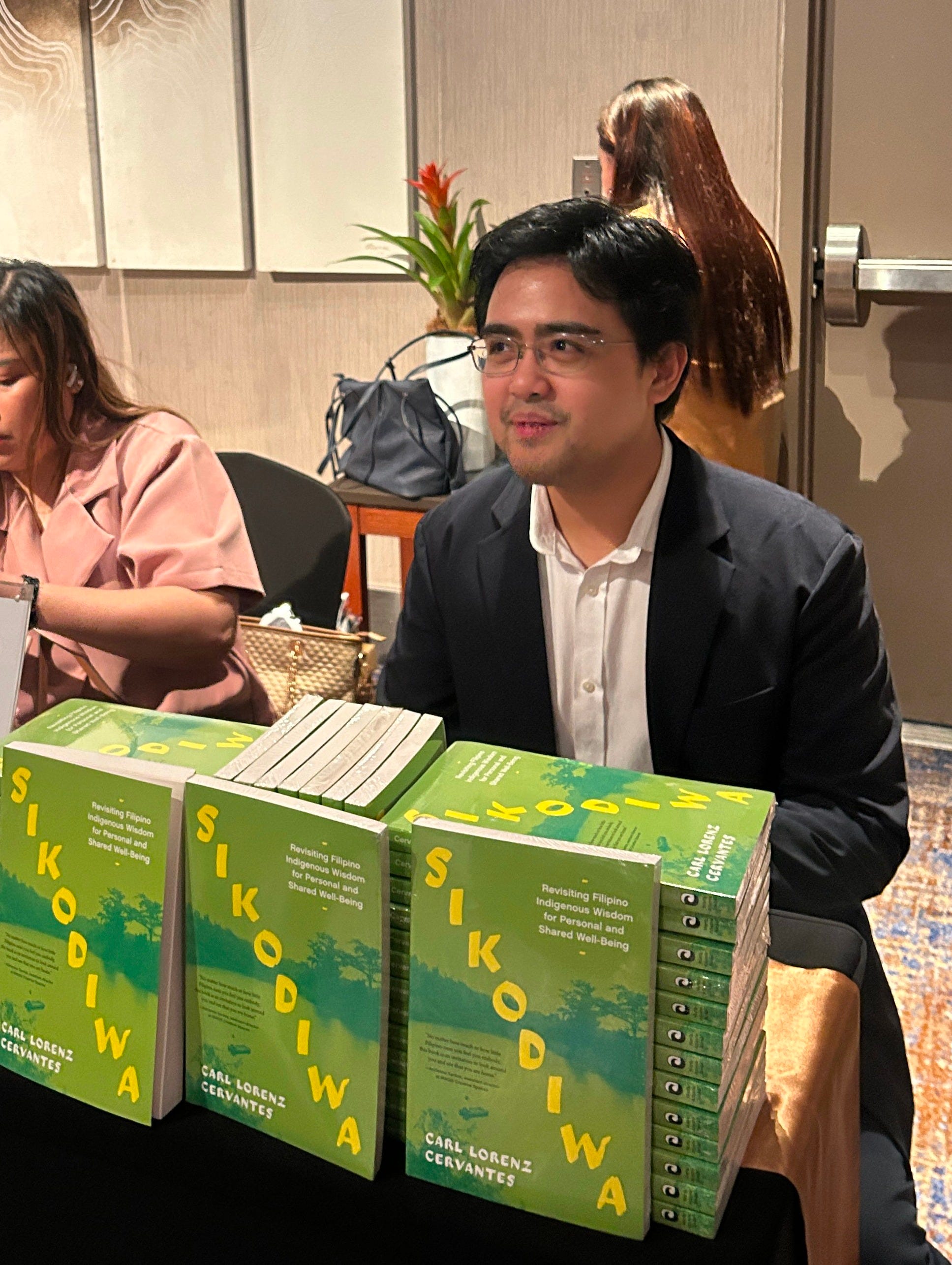
I was also invited to a panel discussion for a conference organized by the Rural Bankers Association of the Philippines. I took the opportunity to also sign some copies of Sikodiwa!
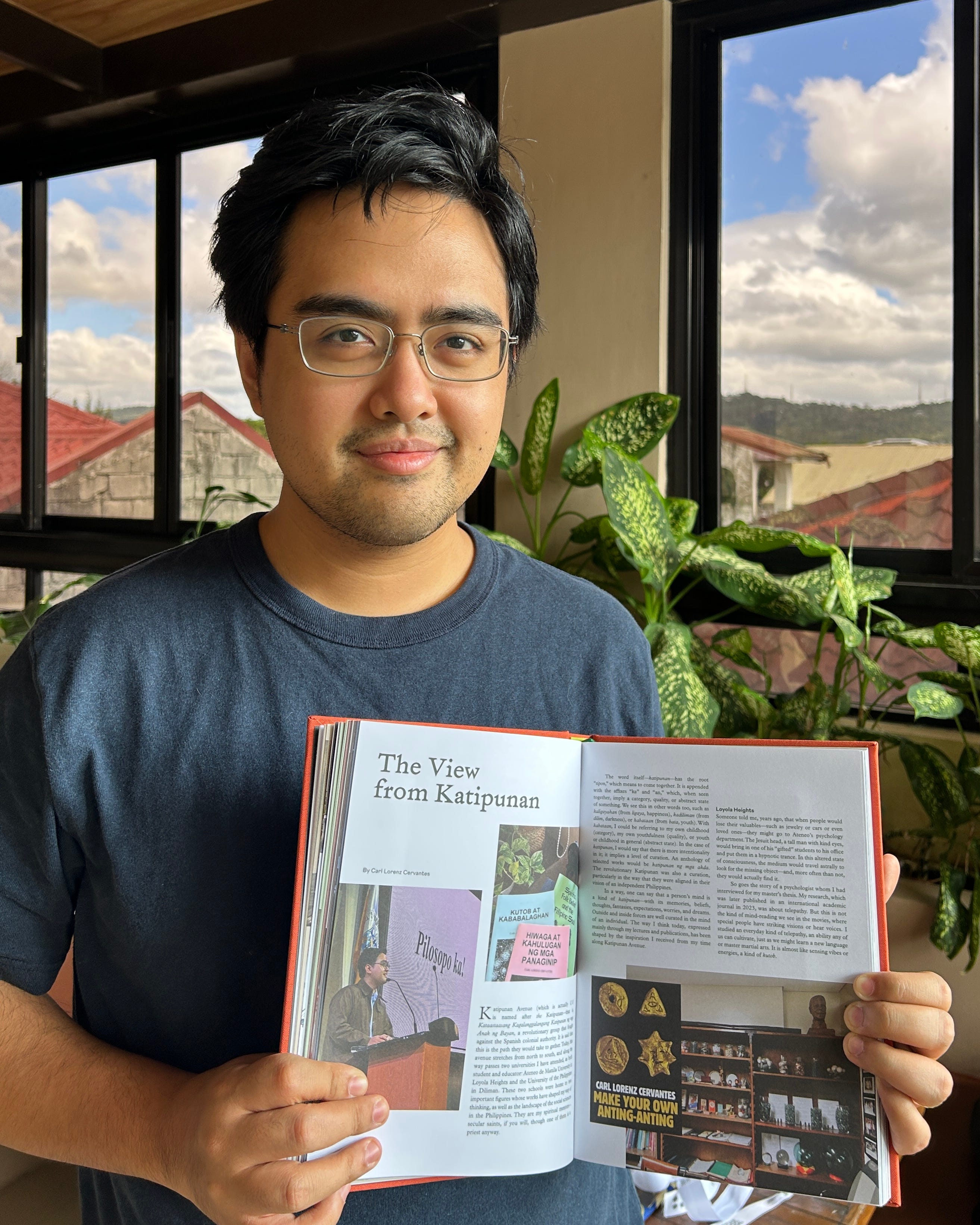
I’m also excited to share that I was invited to write a chapter and share some designs for a book about Quezon City. I wrote about what I’ve learned in both Ateneo de Manila University and the University of the Philippines—both great universities within the same area! Following the announcement of QC’s designation as UNESCO Creative City of Film, the local government under Mayor Joy Belmonte commissioned Do Good Studio to create QC Stories: The City We Call Home.1 I was told that copies would be made available in selected libraries in Quezon City.
New Releases

What have I been devouring and discovering lately? In this series, I discuss my most current fascinations, things that have stood out in my readings and engagements. In this February episode, I talk about stages of human development in Filipino psychology, racism embedded in folklore, the characteristics of lowland Christian art, and more!
Layag-tier subscribers can watch this episode now.

“To be human is to understand other human beings. To be kapwa is to transcend the self.”
First written in 2022, this e-book is a series of seven light essays that play with various everyday phenomena usually considered “supernatural,” such as telepathic powers, shared consciousness, and religious beliefs about the structure of the universe. Ani and Layag tier subscribers can access this now.

In Chapter 7 of Sikodiwa, titled “Deep Spirituality,” I talk about a folk healer I met in Negros Island. I’m now releasing my actual field notes from the day itself, as well as photos of Silay City, from March 2024. This is available now for all paying subscribers on my Patreon.
Free Recording: Lecture on Ecological Thinking
The video recording of my January 23 roundtable discussion with the Center for Conservation Innovations is out on my YouTube channel now:
Care for the Inner Garden
It’s been a very busy month. I barely had time to really listen to my own body, and so that mix of low-grade work-related anxiety and too many really good espressos ruined my stomach with a bad case of hyperacidity. 😖 Not to worry; I have this now and then, at least once a year, so I already know what to do—and, in just a few days, I had fully recovered. 😌🍵
I read about the connection of illness and the psychological shadow, and I can’t help but apply it to my current predicament.2 The shadow is that part of us that we deny in order to curate ourselves as a “good person” in society. It isn’t really “bad” per se, but we tend to externalize it as such: as devils, barbaric foreigners, movie villains, and even people in real life that we hate. Anyway, when we are sick, we tend to allow ourselves to succumb to our own denied needs, and in this case, what I needed, apparently, was to take a break. I’m sure many of my fellow academics—teachers, researchers, and the like—know how often we deny our own bodies to pursue our “noble” role. In doing so, we lose sleep, extend work hours with no compensation, ruin our own eating habits, skip on exercise, give up recreational hobbies, and so on. But we can be good academics and healthy people. This is a lesson for myself as well. 🤧
Quick Resource Guide
🌞 FREE ACCESS!! My essays on Lifestyle Inquirer, published academic papers, and recorded public lectures.
📖 Order my new book, Sikodiwa! PH-based readers: Fully Booked, National Bookstore.
❤️🔥 Research info dumps, lecture recordings, downloadable e-books on Philippine folklore and folk psychology: Sikodiwa on Patreon
Dossey, Larry. “The Light of Health, the Shadow of Illness.” In Meeting the Shadow: The Hidden Power of the Dark Side of Human Nature, edited by Connie Zweig and Jeremiah Abrams. Jeremy P Tarcher/Penguin, 1991.
Agree! Interested to see what it’s like to learn reality via relationships, not taxonomy